Eager to test the road worthiness of my newly overhauled car, I set out on what I thought was a Saturday morning to go from my motel in Albuquerque, New Mexico to nearby Santa Fe, the state capital. I set off to Santa Fe via the scenic route through the mountains – the famous Turquoise Trail. This route has more than its share of ups and downs through the local hills and mountains, and I knew that this would be a good road test to see exactly what my car could handle.
The only problem was – it wasn’t Saturday morning – it was only Friday morning. I arrived at the farmers’ market location in the old Santa Fe railyard only to find everything closed. What the HECK was going on? I finally encountered a crew setting up for a band concert that would happen that evening. They told me that there was a band concert in the railyard every Friday evening – and that it was Friday morning, not Saturday morning.
So here I was, all the way over in Santa Fe, seemingly for nothing. I wanted to get some Trementina Salve, and the one place I knew I could find it was at the Santa Fe farmers’ market that was held every Saturday morning, where local herbalists would be selling their wares, including the famous Trementina Salve. The only problem was that it was Friday morning instead of Saturday morning. I sure didn’t want to come all the way to Santa Fe the following morning, and I was determined to get some Trementina Salve before heading back to Albuquerque; heck – they must be selling it somewhere in town, even though it wasn’t the Saturday morning farmers’ market.
Instantly, my mind started working. The first place I decided to look was the local Whole Foods Market. I wasn’t sure they would have it, but it was worth a try. I connected with a sales lady there who told me that they didn’t carry it. She also told me that the local herb store in town had closed down – not moved, but had totally gone out of business. What a pity – I was sure that I would have been able to find the Trementina Salve there if they were still in business. One good lead that I did get from the sales lady was to look for it at La Montanita Co-op. I went there, which had been one of my old haunts when I lived in Santa Fe, and sure enough, they had plenty of the stuff – almost a whole shelf full of jars of the Trementina Salve. Here was someplace I could come to get the Trementina Salve almost any day of the week.
Unfortunately, the Trementina Salve they were selling at the Santa Fe Co-op had almost none of the active ingredient, Pinyon Pine resin, in it, and consequently virtually none of its characteristic aroma. Seems like I’m gonna have to go back to the herbalists at the Saturday morning farmers’ market if I want to get some of the real stuff. You can sample some of the salve before you buy it, so I’ll know if I’m getting the real deal or not.
What Is the Trementina Salve?
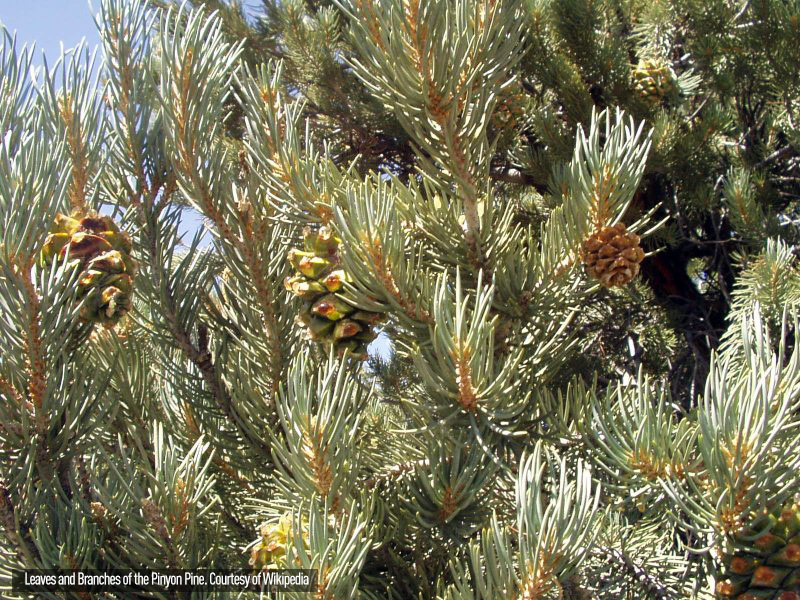
The famous New Mexican Trementina Salve has only three ingredients, but it is a real healing gem. Those three ingredients are as follows: Olive Oil, Beeswax, and the resin of the Pinyon Pine tree. The Pinyon Pine tree grows wild all throughout the mountains and canyons of northern New Mexico – in fact, a good portion of the landscape in northern New Mexico is covered with Juniper and Pinyon Pine forests. In fact, the Pinyon Pine is New Mexico’s state tree. Among the New Mexico residents who are not particularly into herbal healing, the wood of the Pinyon Pine is chopped up and burned as an aromatic firewood on cold nights; in the fall, roadside vendors can be seen selling Pinyon Pine nuts, which are quite a local delicacy. I have yet to be able to savor the difference between a Pinyon Pine nut and an ordinary Pine nut, but my New Mexican friends assure me that there’s quite a difference. Herbalists here in New Mexico call the Pinyon Pine New Mexico’s healing tree, and my own personal experience bears this out.
Let’s take a closer look at the three ingredients in the Trementina Salve, and see the roles that each of them plays:
Olive Oil – This is the basic, foundational ingredient in the Trementina Salve, because it is the liquid medium into which both of the other two ingredients, namely the Beeswax and the Pinyon Pine resin, are dissolved.
Beeswax – Beeswax serves two purposes: First, it thickens the Olive Oil to the semisolid consistency of a salve or unguent. Secondly, it helps to moisturize and beautify the skin.
Pinyon Pine Resin – This is the main active or therapeutic ingredient of the Trementina Salve, the ingredient that gives the salve most of its distinctive healing properties and virtues. More will be written about it later.
In my researches on Mexican herbal medicine that I undertook in Mexico, I discovered that another healing salve, also called the Trementina Salve, was made utilizing the resin of the Ocote Pine tree. The Ocote Pine, which is probably one of the most resinous species of Pine there is, is often burned as incense in religious rituals. In this sense and usage, the Ocote Pine joins the ranks of Copal resin and Palo Santo, or Holy Wood. I have investigated and experimented around with the Ocote Pine, and it seems to hold great promise as an aromatic anti-rheumatic herb, with a strong ability to open the meridians and subtle energetic pathways of the body.
But as for the New Mexican Trementina Salve, my online google search reveals that it is a skin moisturizer and beautifier and a drawing salve that helps draw out splinters and foreign objects from the skin. Furthermore, its resinous aromatic qualities are strongly antiseptic, and are said to be antibacterial, antifungal and antiviral. It is also a warming, stimulating aromatic rub to promote circulation when applied topically, and also to soothe pain and loosen up tight muscles and joints. I have even met herbalists at the farmers’ market who assured me that there is no skin condition that the Trementina Salve will not heal, or at least ameliorate; a tall claim, for sure – but why not put it to the test?
How Trementina Salve Works: Lessons from Mother Nature
The Pine tree is an evergreen tree, meaning that the vital force that animates its leaves and branches is constant throughout the year, and never wanes, not even in fall and winter. Because of this fact, ancient and primitive peoples intuited that Pines and other evergreen trees were strong in the Life Force; in Medical Astrology, it is said that Pines and other evergreen trees have a strong solar energy that promotes or strengthens the vital solar forces of circulation, metabolism and immunity. It is known that Pine needles are a rich source of vitamin C, which can strengthen one’s immune resistance to colds and flu during the long winter months, throughout which the Pine needles remain fresh and green. The powerful antioxidant Pycnogenol is distilled from the bark of a certain European Pine tree; Pycnogenol prevents or reverses the cellular damage done by toxic free radicals to maintain and promote youth and vitality. In Indian Ayurvedic Medicine, the pollen of the evergreen Deodara tree is used in powerful Guggulu resin formulas to treat arthritis and rheumatism. Similarly, slices of Pine branches, called Song Jie in Chinese herbal medicine, are also used for their warming, stimulating solar properties to treat arthritis and rheumatism, especially arthritis of the knee. And the Pinyon Pine, as New Mexico’s healing tree, shares in these various healing properties and virtues.
The ancient medical sages of Greece, China and India were, above all, keen observers of Nature; one thing they noticed is that, when a tree gets bruised or injured, it exudes its sap or resin to create scar tissue to help it heal from these injuries. And so, these ancient medical sages found out that these same tree resins could also be used in healing salves and balms to speed up the healing of bruises, cuts, and other wounds in people as well. This is one of the best examples of the Doctrine of the Signatures, and of applied Natural Philosophy. The Bible asks, “Is there no Balm in Gilead, is there no physician there?” Balm of Gilead ( Commiphora opobalsamum) also known as Mecca Balsam, which is a botanical relative of Myrrh, was one of Galen’s favorite healing herbs. Other resins obtained from resinous trees of the Arabian desert areas include Myrrh, Frankincense and Dragon’s Blood; all of these promote the healing and regeneration of wounds, cuts and other traumatic injuries. Furthermore, Greek Medicine sees these tree resins as being essentially analogous to Blood or the Sanguine Humor in the human body – the humor that is most involved with healing, regrowth and regeneration.
The ancient medical sages also observed that infections in the human body generally let off a vile putrid odor; in fact, Greek Medicine calls them putrefactions – like when food spoils or putrefies. Infectious organisms strike and gain a foothold when the immune defenses protecting a certain part of the body grow weak, and the biological terrain of that body part becomes compromised. Since infections give off such a vile, putrid odor, reasoned these ancient medical sages, why not fight them off and discourage their growth with medicines that have a pleasing fresh, sweet scent? Aromatherapy is one healing modality that really capitalizes on the antiseptic, antimicrobial properties of many aromatic essential oils; among the most powerful of these antimicrobial aromatic essential oils are those of Thyme and Oregano. The resin of the Pinyon Pine tree is also very fragrant, with a strong, heady, pleasing aroma; it is also rich in antiseptic aromatic essences and oleoresins. Besides helping the tree heal, these aromatic essences that are so strong and concentrated in the resin of the Pinyon Pine tree, as well as other tree resins, also constitute the vital immune system of the tree, helping it to fight off infections as it heals. So, why not borrow these healing and antimicrobial properties of Pinyon Pine and other tree resins and utilize them in the service of healing?
In a nutshell, I have just summarized the essence of all the healing properties and virtues of Pinyon Pine resin, which is the main active or therapeutic ingredient in the Trementina Salve. Wonderful, isn’t it?